internal
Plasterboarding and dry lining
Plasterboarding costs £12 to £22 per square metre supplied and fixed, before any skim or tape-and-joint over the top. Boarding and skimming a room together runs £30 to £45 per square metre, and dot-and-dab on a solid wall is at the lower end of that.
What this covers
What it costs. Plasterboarding costs £12 to £22 per square metre supplied and fixed. Full cost breakdown.
What the job covers
- Dot and dab boarding a solid wall to take a skim
- Boarding out a stud partition both sides
- Boarding a ceiling to joists, including noggins where boards land short
- Insulated board on a cold external wall
- Fire and moisture board where building control asks for it
What is involved
Dry lining is boarding a wall or ceiling rather than plastering it wet, and on most work built in the last forty years it is what is already there. Board goes onto a solid wall on dabs of adhesive, or onto a timber or metal frame with screws, and the surface is then either skimmed in finish plaster or taped and jointed to a paint-ready finish.
The two finishes are not interchangeable and the quote should say which. A skim gives a continuous plaster surface and is the domestic default in Britain. Tape and joint fills and sands the board joints only, is specified by finish level on commercial work, and is quicker and cheaper but shows more under a low light if it is done to a low level.
The practical advantages are speed and what you can put behind the board: insulation, services, and a cavity that is not there in a solid wall. The practical cost is that you lose thirty to fifty millimetres off the room on every dot-and-dabbed wall, and that fixing anything heavy afterwards needs the right plug or a noggin you should have asked for before the board went up.
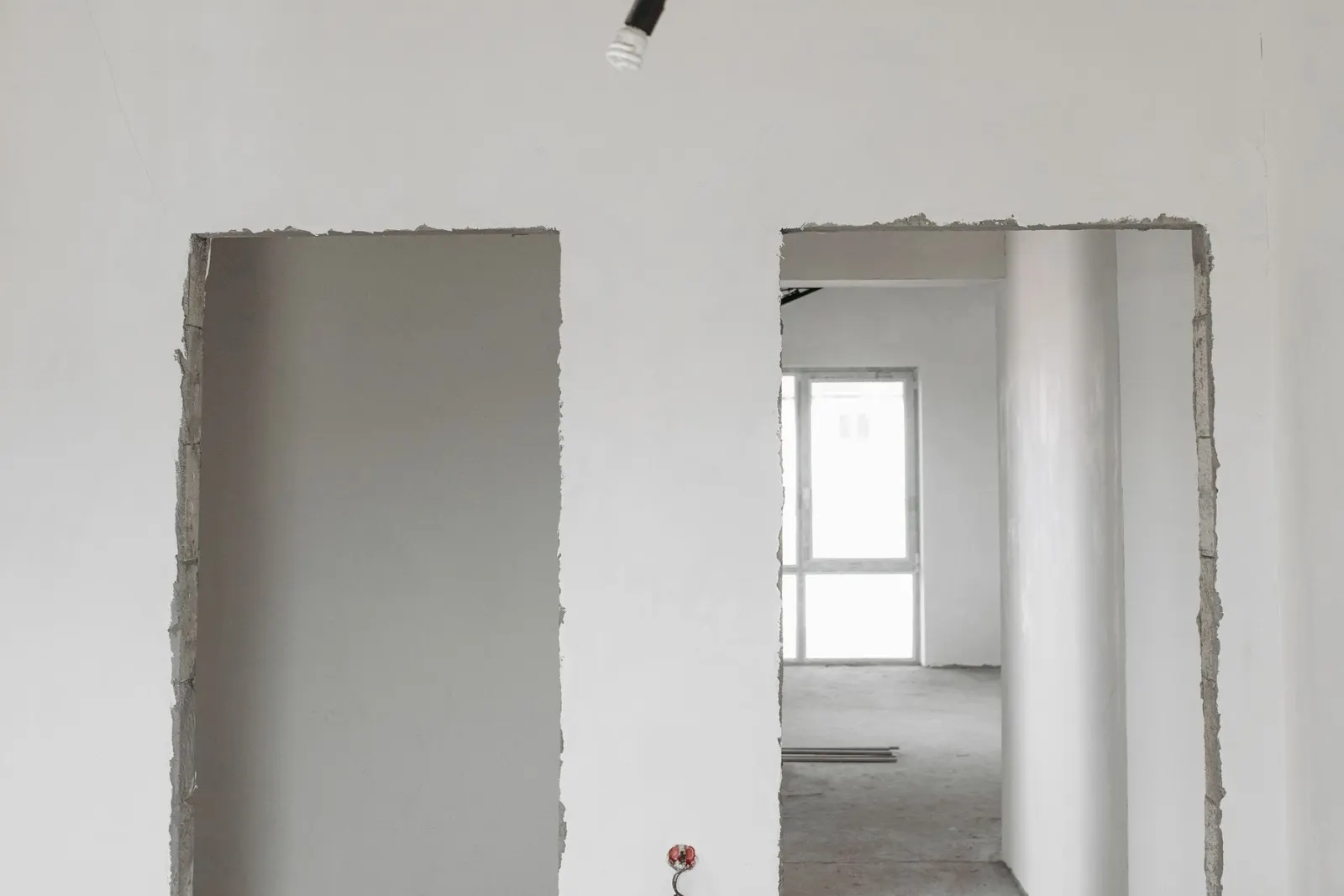
Dot and dab boarding a solid wall to take a skim, one of the jobs a plasterboarding and dry lining specialist is hired for.
Choosing someone for the job
Ask whether the quote is dot-and-dab or framed, and what board they are using where. Ask whether it is being skimmed or taped and jointed, and if taped, to what finish level. Ask about noggins for anything heavy before the board goes up, not after. And ask who takes the old plaster away, because on a strip-out that is a skip.
Common questions
Is dry lining better than wet plaster?
Neither is better; they answer different questions. Dry lining is faster, lets you insulate and hide services, and loses you a little room. Wet plaster on a solid wall is thinner, harder, and lets a pre-1919 wall breathe if it is lime.
Can I hang a television on a plasterboard wall?
On the board alone, no. Into the timber or metal behind it, or into a noggin put in for the purpose, yes. Heavy-duty plasterboard fixings hold light things well and heavy things briefly.