external
Pebbledash, Tyrolean and removal
Pebbledash can be applied, patched, rendered over or removed. Rendering over sound pebbledash is usually cheaper than hacking it off, and tapping the wall is what decides which job you have.
Post your plastering job to Premium membersTell us about your job once. Premium plasterers who cover your area can then contact you.Describe your job
What this covers
What the job covers
- Hacking off failed pebbledash back to the brick
- Rendering over sound pebbledash with a thin-coat system
- Patching a blown section to match the existing aggregate
- Applying a Tyrolean finish by machine
- Dashing a new extension to match the original house
What is involved
Pebbledash is a wet render with aggregate thrown onto it while it is still green, so the stone is held in the coat rather than stuck to the surface. Tyrolean is the machine-applied cousin, flicked on with a hand-cranked hopper to give a finer texture. Both were used at scale on interwar and postwar housing because they weatherproof a wall cheaply and cover brickwork that was never meant to be seen.
The modern question is almost always removal. Pebbledash has gone out of fashion, it is hard to repair invisibly because the aggregate is never the same twice, and it fails in patches when water gets behind it. Taking it off is heavy, dusty work that often takes some of the brick face with it, and the brick underneath was often never meant to be seen.
So the usual answer is to render over it. A sound, well keyed pebbledash is an excellent base for a thin-coat system, and the texture disappears under the basecoat. Anything hollow has to come off first, and if enough is hollow the job becomes a hack-off whatever you wanted.
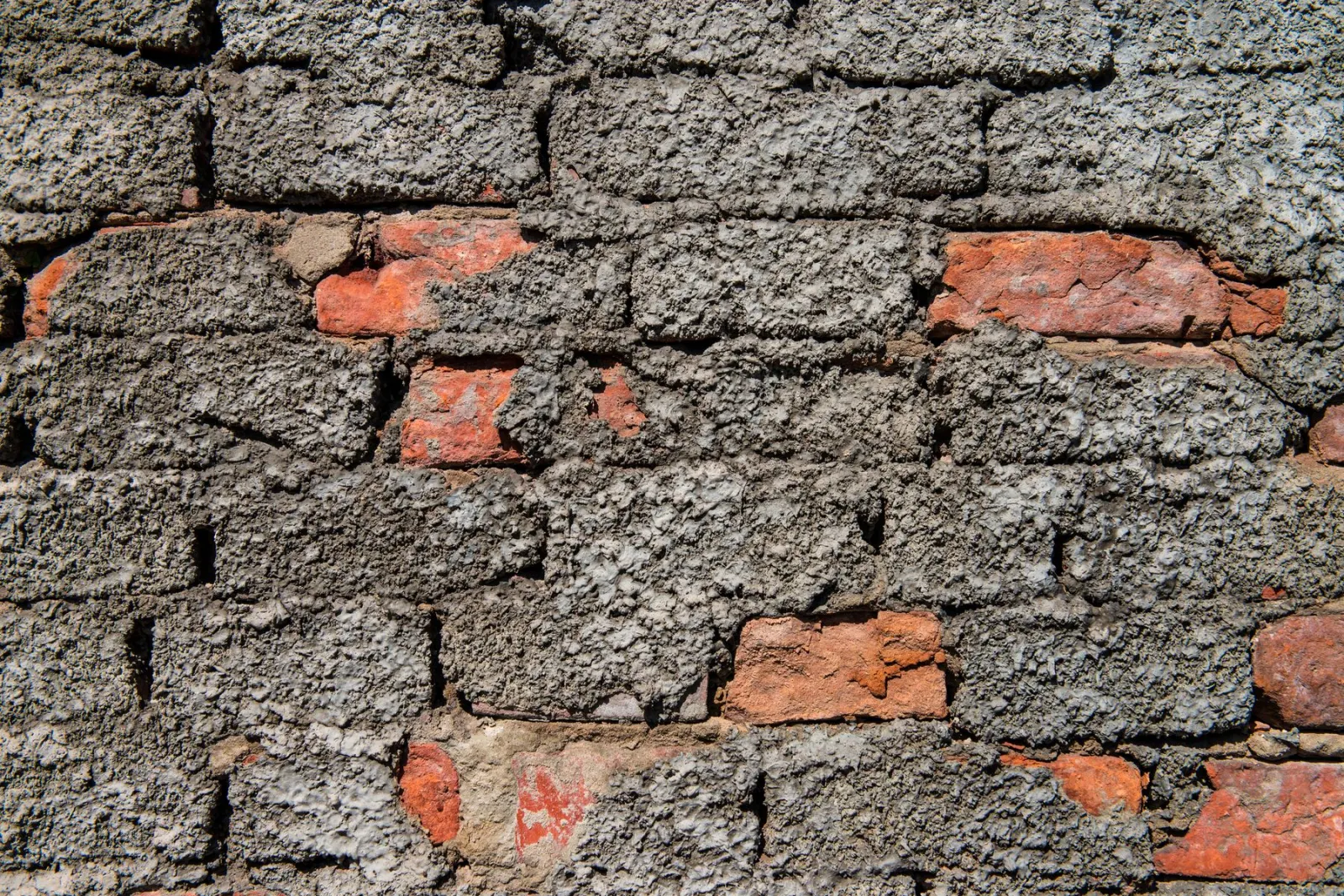
Hacking off failed pebbledash back to the brick, one of the jobs under pebbledash.
Choosing someone for the job
Ask them to tap the wall and tell you what they heard. Ask whether the quote is to remove or to render over, and what triggers a change from one to the other once they start. Ask who takes the waste away and whether a skip is in the price. And ask what happens if the brickwork underneath turns out to be damaged.
Further reading: Which render to use, and do you need permission; Painting pebbledash, or removing it: how to decide.
Related jobs:
Common questions
Can you render over pebbledash?
Yes, if it is sound and well keyed, and it is usually the cheaper answer. The texture disappears under a basecoat. Tap it first: anything hollow has to come off.
What does removing pebbledash involve?
Hacking it off with hammers and chisels or a power tool, off scaffold, then taking the waste away and putting a new finish on the wall, because the brick face often comes away with the dash. A test patch in a hidden spot shows what to expect.
Can a patch of pebbledash be repaired?
It can be filled and dashed, and it will show. The aggregate in a 1930s wall is not sold any more and the surrounding surface has weathered for ninety years. On a small area it is worth doing; across an elevation it is worth rendering.
Why is my pebbledash falling off?
Water has got behind it, usually through a crack, a failed sill or a bridged damp course, and frost has done the rest. The patch that has come off is rarely the whole of the problem, which is why it is worth tapping the rest.