Guide
Dry lining finishes: tape and joint levels 1 to 5
Taped and jointed board is specified by finish level, and the number decides how much filling and sanding is in the price. Most domestic work wants level 4 and gets quoted as though it were level 2.
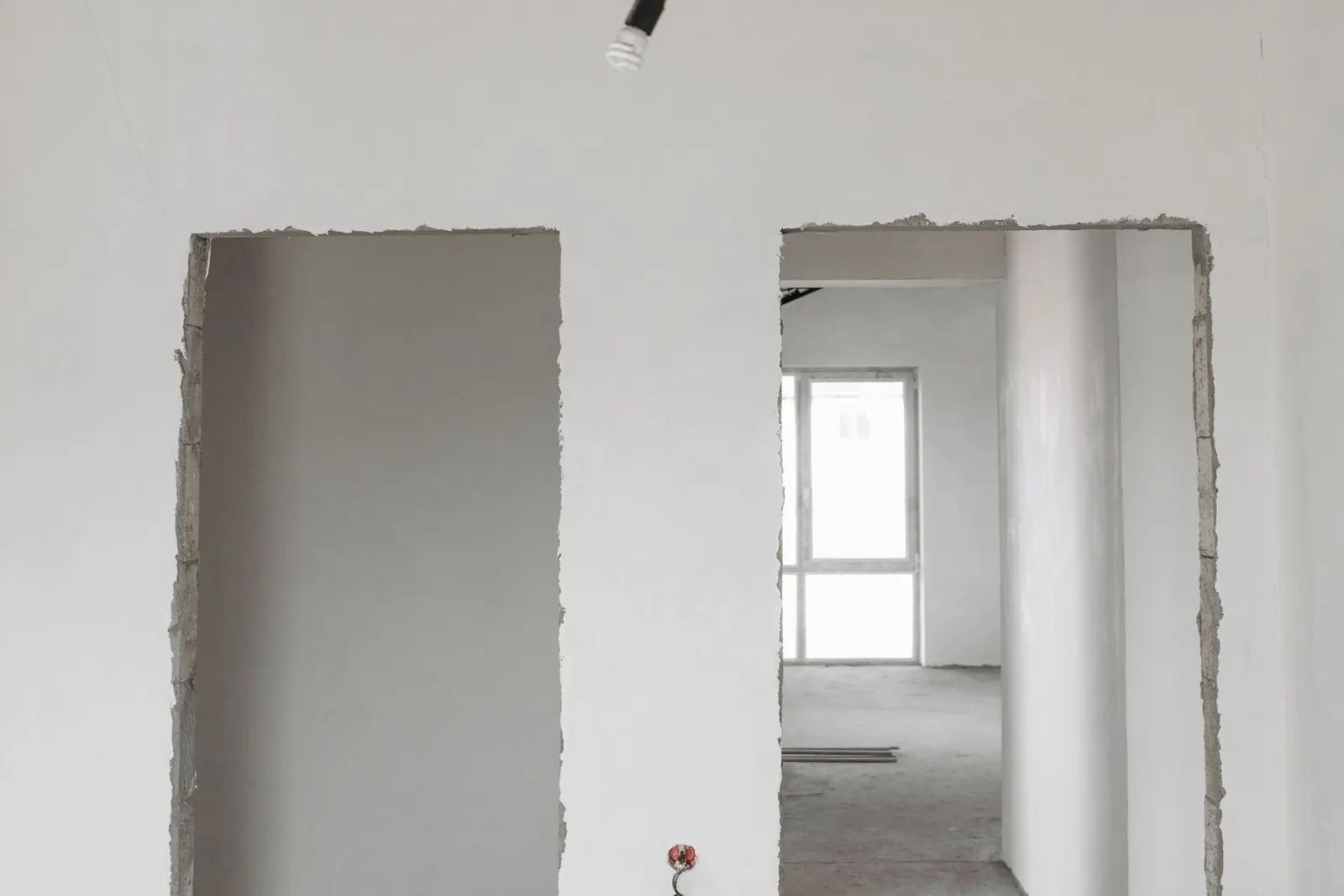
Skim or tape and joint
Once plasterboard is up there are two ways to finish it.
A skim is two or three millimetres of finish plaster across the whole board, giving a continuous plaster surface. It is harder, and more forgiving of an awkward light because the whole wall is one material.
Tape and joint fills and sands the joints and screw heads only, leaving the board paper as the surface. It is much faster, has effectively no drying time, and is what almost all commercial work uses.
What the levels mean
Tape and joint is specified by finish level, and the number decides how much filling and sanding is in the price.
Level 1 is tape bedded in compound, no finishing. Above a ceiling, in a void.
Level 2 adds one coat over the tape and fasteners. Garages, plant rooms, anywhere behind tiling.
Level 3 adds a second coat. For heavy textured finishes.
Level 4 is three coats, sanded flat, ready for a matt paint. This is the domestic standard and what most people mean without saying it.
Level 5 adds a thin skim of compound across the entire board. This is what you want under a sheen paint, a dark colour, or a wall with a window throwing light along it.
Why the level is invisible until it is not
Under a flat, even light a level 3 wall and a level 5 wall look identical, which is why the argument always happens after the decorator has left.
Under a raking light, a low winter sun through a patio door, a wall light washing down, or a bright colour in a sheen finish, the joints on anything below level 4 read as shallow ridges running across the wall.
So the question to ask yourself is not what looks good in the showroom. It is where the light falls in that room in the afternoon in February.
Getting it in the quote
Ask for the level in writing. Level 4 is such an obvious default to a drylining contractor, and such an invisible detail to a homeowner, that neither side tends to mention it.
A quote that says tape and joint to level 4, sanded, ready for decoration can be compared like for like. One that says only tape and joint leaves the level open.
Putting it right afterwards
There is no trick. A wall finished below the level the light demands has to have another coat of compound applied and sanded across its whole area, which means the room comes out again and the dust comes back.
That is why the one sentence in the quote is worth more attention than it looks.
Common questions
What is a level 4 finish?
Three coats of jointing compound over the tape and fasteners, sanded flat and ready for a matt paint. It is the domestic standard and what most quotes mean whether or not they say so.
Do I need level 5?
If the wall takes a sheen or gloss paint, a dark or strong colour, or a raking light from a window or a wall light, yes. Under ordinary flat lighting with a matt paint, level 4 is enough.
Is tape and joint as good as skimming?
For a flat paintable wall, at level 4 or 5, yes, and it is faster and cheaper. A skim gives a harder continuous surface and copes better with difficult light, which is why domestic work in Britain still tends to skim.
Why can I see the joints on my new wall?
The finish level was below what the light in the room needs. Correcting it means another coat of compound and another sand across the whole wall, so it is worth settling in the quote.