internal
Tape and joint
Tape and joint finishes plasterboard without a skim. It is specified by finish level, and the thing to know is that most domestic work wants level 4 and gets quoted as though it were level 2.
Post your plastering job to Premium membersTell us about your job once. Premium plasterers who cover your area can then contact you.Describe your job
What this covers
What the job covers
- Taping, filling and sanding board joints to a paint-ready finish
- Finishing to a specified level on a commercial fit-out
- Corner beads and external angles on a new partition
- Filling screw heads and making good before decoration
- Machine jointing on a large area where speed matters
What is involved
Taping and jointing finishes plasterboard without plastering it. The joints are bedded with tape and jointing compound, the screw heads are filled, and the whole lot is sanded flat so the board can be painted directly. It is faster than skimming, it needs no drying time worth speaking of, and it is what almost all commercial fit-out uses.
The finish is graded. Level 2 is tape bedded and one coat, which is a garage or a plant room. Level 3 takes a second coat. Level 4 fills and sands to take a matt paint and is the domestic standard. Level 5 skims a thin coat of compound across the whole board, which is what you want under a sheen paint or where a window throws light along the wall.
That last point is where the arguments happen. Under a flat light a level 3 and a level 5 look identical. Under a low sun through a patio door, the joints on anything below level 4 read as shallow ridges across the wall, and the only fix at that point is to do the work again.
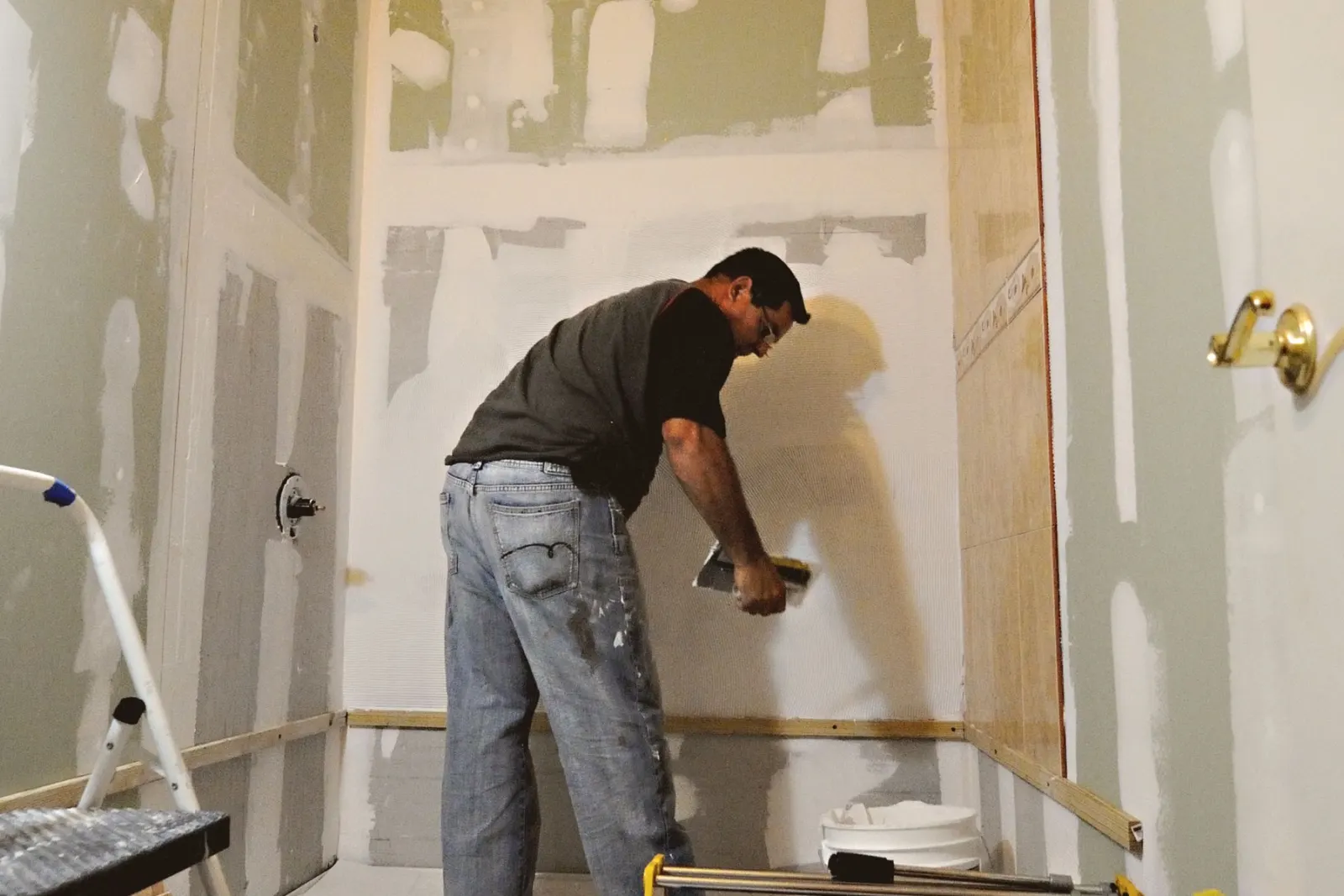
Taping, filling and sanding board joints to a paint-ready finish, one of the jobs under tape and joint.
Choosing someone for the job
Ask which finish level is in the price, and if the answer is vague, ask for it in writing. Look at the wall you are having done and work out where the light falls in the afternoon, because that is what decides whether level 4 is enough. Ask how dust is controlled, since the sanding is the dirtiest part of any plastering job.
Further reading: Dry lining finishes: tape and joint levels 1 to 5; Plasterboard types: which board goes where, and how thick.
Related jobs:
Common questions
What is a level 4 finish?
Joints taped and filled, screw heads filled, everything sanded flat and ready for a matt paint. It is the domestic standard. Level 5 adds a thin skim of compound across the whole board and is what you want under a sheen or a strong side light.
Is tape and joint cheaper than skimming?
Usually, and it dries far faster. A skim gives a continuous plaster surface which is harder and, in a room with difficult light, more forgiving.
Can you paint straight onto taped and jointed board?
Yes, after a suitable primer or mist coat. The board paper and the jointing compound absorb differently, so painting a topcoat straight on without sealing gives a patchy finish that shows the joints.
Why can I see the joints on my new wall?
Almost always because the finish level was lower than the light in the room needs. Under a raking light a level 2 or 3 joint reads as a shallow ridge. Correcting it means another coat and another sand across the whole wall.