internal
Ceiling repair and replastering
Overboarding and skimming an average ceiling takes a day. Taking an old lath and plaster ceiling down first adds the labour and the skip, and it is a great deal dirtier than anyone expects.
Post your plastering job to Premium membersTell us about your job once. Premium plasterers who cover your area can then contact you.Describe your job
What this covers
What the job covers
- Overboarding a cracked or bowed ceiling and skimming it
- Taking down a failed lath and plaster ceiling and reboarding
- Making good a ceiling after a leak from above
- Repairing a ceiling where a wall or stud has been removed
- Filling and skimming hairline cracking across a whole ceiling
What is involved
Most ceiling work is one of three jobs. A ceiling that is cracked but sound gets overboarded: new plasterboard screwed through into the joists, then skimmed, which is faster and cleaner than pulling the old one down. A ceiling that is bowed, springy or coming away has lost its key and has to come down. And a ceiling that has had a leak through it needs the cause fixed and the plaster dried before anybody decides which of the two it is.
Lath and plaster is the pre-war construction: thin timber laths with hair-reinforced plaster pushed through the gaps to form a key behind. When the keys break the ceiling sags between the joists and sounds hollow. It can be reinforced from above in some cases, which is worth asking about in a listed building because it keeps the original fabric.
The practical thing to know is that ceilings are priced above walls of the same area. Everything is done overhead, it needs two people or a board lifter, and the finish is harder because gravity is working against the plaster the whole time.
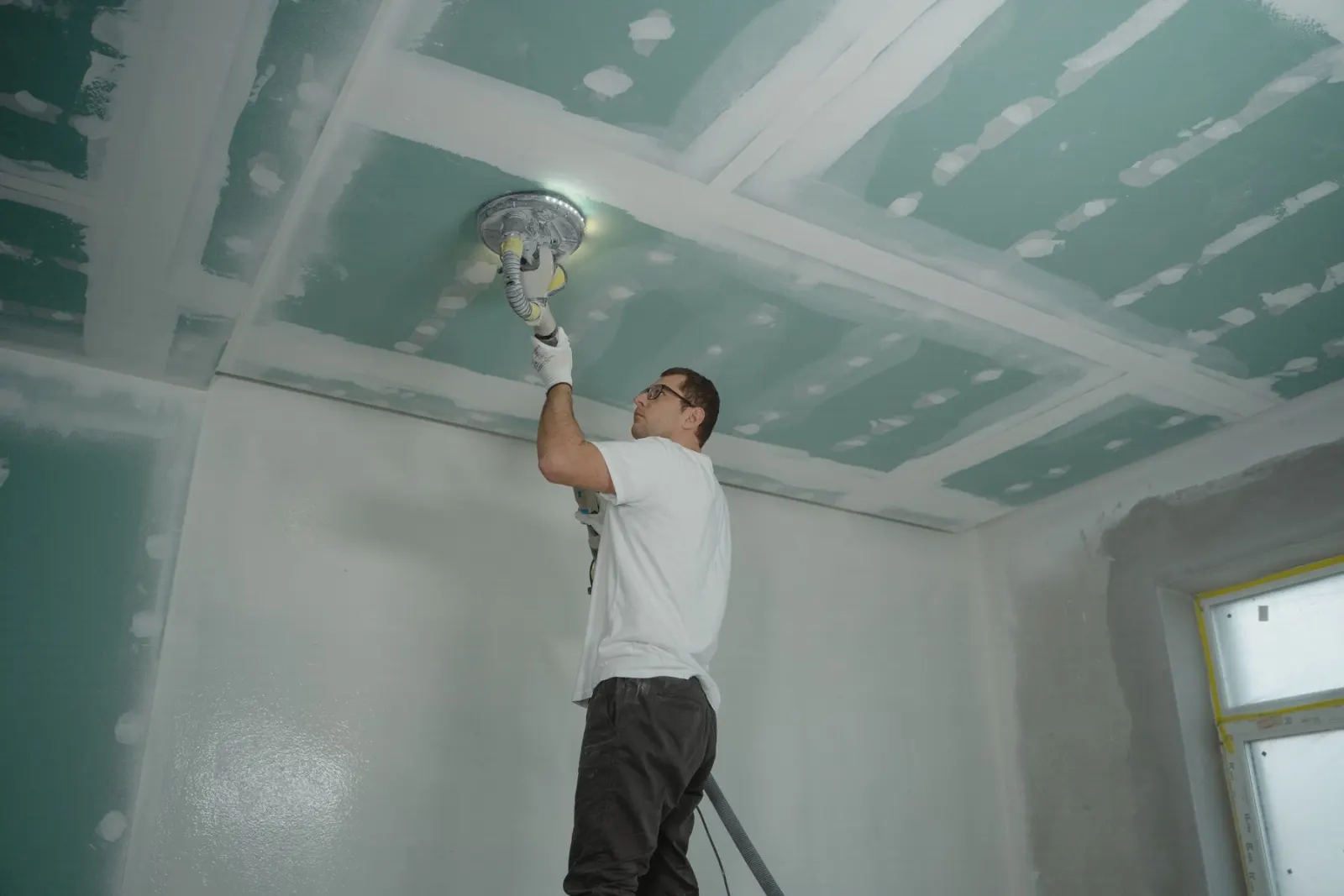
Overboarding a cracked or bowed ceiling and skimming it, one of the jobs under ceiling repair.
Choosing someone for the job
Ask whether they are overboarding or taking it down, and what made them choose. Ask what they found when they tapped it. Ask who takes the waste away on a strip-out. And if there is coving or a rose, ask before they start whether it is being saved, because saving it has to be planned before the work begins.
Further reading: Cracks in plaster: why they appear and which ones matter; How long does plaster take to dry? When you can paint; Does Artex contain asbestos? What to check before sanding.
Related jobs:
Common questions
Can you plaster over a cracked ceiling?
Over hairline shrinkage cracks, yes. Over a ceiling that sounds hollow or moves when pushed, no: the new plaster is only as sound as what it is stuck to, and it will crack along the same lines within a year.
Is it cheaper to overboard or take the ceiling down?
Overboarding, usually, and it is far less mess. It loses you about fifteen millimetres of height and it does not work if the old ceiling is heavy, loose or already overboarded once.
Why is my ceiling sagging between the joists?
On a pre-war house that is lath and plaster with broken keys: the plaster that squeezed through the laths has snapped off and only friction is holding it. It is a repair job rather than a decorating one, and it is worth looking at sooner than later.
How long before I can paint a new ceiling?
Three to seven days for the plaster to change from pink to pale, then a watered-down mist coat before any proper paint. A ceiling dries slower than a wall because the warm air sits against it and holds the moisture in.