Guide
How long plaster takes to dry, and when you can paint it
Fresh plaster goes from pink to pale as it dries, and the timing depends on the coat and the room rather than on a rule. Painting too early traps moisture and the paint comes back off.
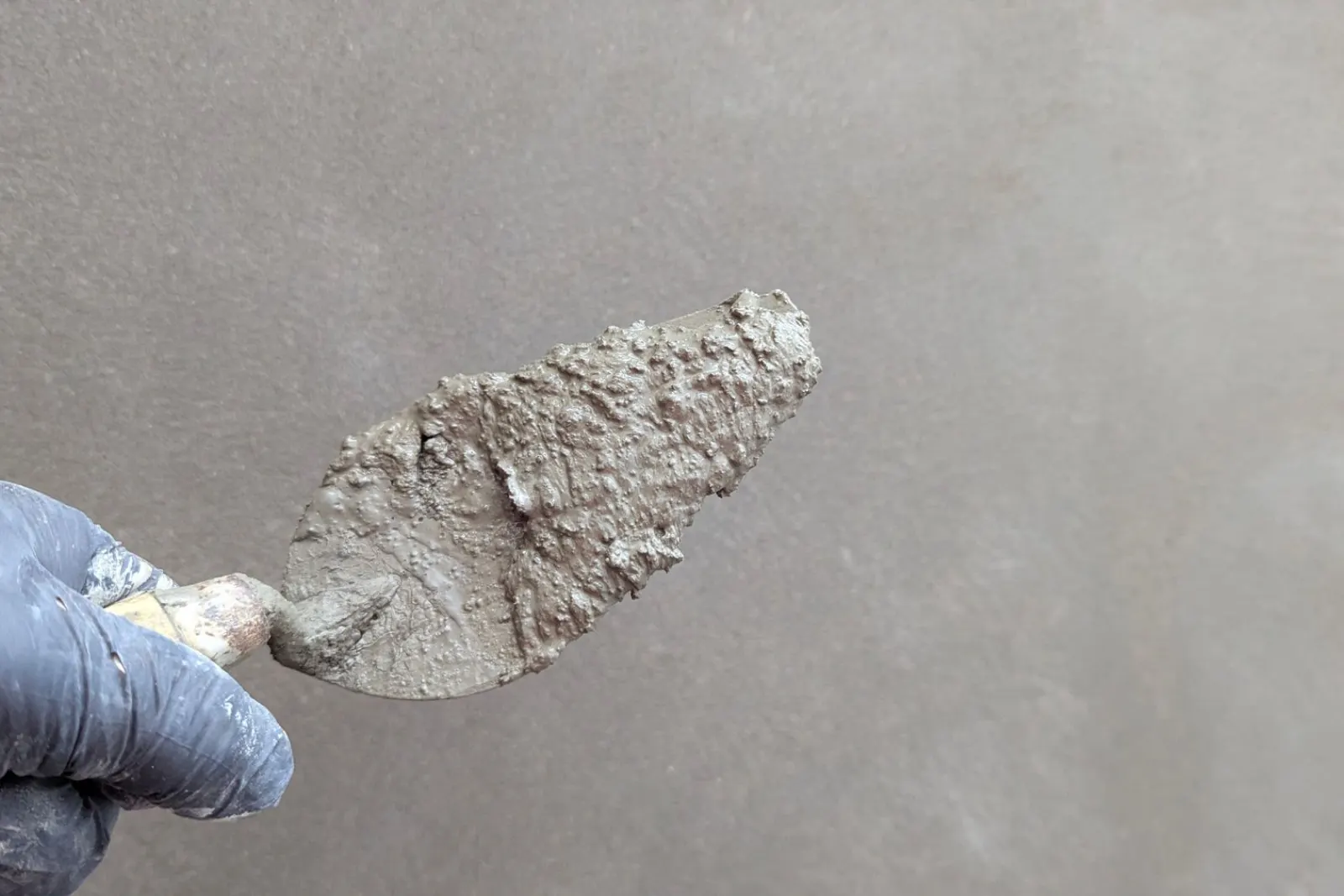
Pink to pale, and why that is the signal
Fresh gypsum plaster is a dark pink-brown when it goes on and dries to a pale cream. That colour change is water leaving the plaster, and it is the only reliable indicator you have without instruments.
It dries from the edges inwards and from the top down, so the last patch to change colour is the one that decides. A wall that is pale everywhere except one dark patch behind the door is not dry.
How long it actually takes
A skim coat: three to seven days in a normally heated room. A backing coat underneath it: seven to fourteen days on its own before anything goes over it. A sand and cement render inside: two to four weeks.
The variables that matter are ventilation and temperature, in that order. A cold room with the window shut can take three times as long as a warm one with air moving through it, and a room with no airflow at all can effectively stop drying because the air against the wall is already saturated.
Helping it along without ruining it
Open the windows. Crack them rather than throwing them wide in freezing weather, and keep some air moving through the room.
Heat gently and evenly. Background central heating is ideal. What ruins a wall is a blowtorch of hot air aimed at one part of it: a fan heater pointed at a fresh skim dries the surface while the depth is still wet, which cracks it and leaves the moisture trapped behind a crust.
A dehumidifier helps in a sealed room and works best combined with gentle heat. On a screed floor, force drying has a proper schedule and is not something to improvise.
The mist coat, and why skipping it fails
New plaster is porous and thirsty. A full-strength emulsion painted straight onto it dries too fast at the surface, does not key, and peels off in sheets later, sometimes months later and usually in strips the width of a roller.
A mist coat is ordinary matt emulsion thinned with water, around three parts paint to one part water, brushed and rolled on and allowed to soak in. Use a cheap contract matt, not a vinyl silk and not a paint that says it needs no primer. Two topcoats go on after it.
What happens if you paint too early
The water still in the plaster has nowhere to go. It pushes at the back of the paint film, and you get patchy sheen, dark shadows that come and go with the weather, and eventually flaking.
There is no fix that does not involve taking the paint back off, so the days spent waiting are considerably cheaper than the alternative.
Common questions
How long before I can paint new plaster?
Three to seven days for a skim in a normally heated, ventilated room, and longer in winter or a cold room. Go by colour rather than by the calendar: uniformly pale all over, including the corners and behind the door.
What is a mist coat?
Matt emulsion thinned with water, roughly three parts paint to one part water, used as the first coat on new plaster so it soaks in and keys. Without it a full-strength topcoat peels off later.
Can I speed up drying with a heater?
Gentle background heat and open windows, yes. A fan heater aimed at the wall, no: it dries the surface while the depth is still wet, which cracks the finish and traps the moisture behind it.
Why has my new plaster gone patchy?
Usually it is still drying, and the dark areas are the wet ones. If it is uniformly dry and the paint is patchy, the mist coat was skipped or was too thick and the plaster has taken the topcoat unevenly.