Guide
Screed drying time: walking on it, tiling and flooring
Light foot traffic after a day or two on a flowing screed and a few days on sand and cement. Before tiling or flooring, allow about a day per millimetre for the first 40mm and slower beyond, then confirm with a moisture test.
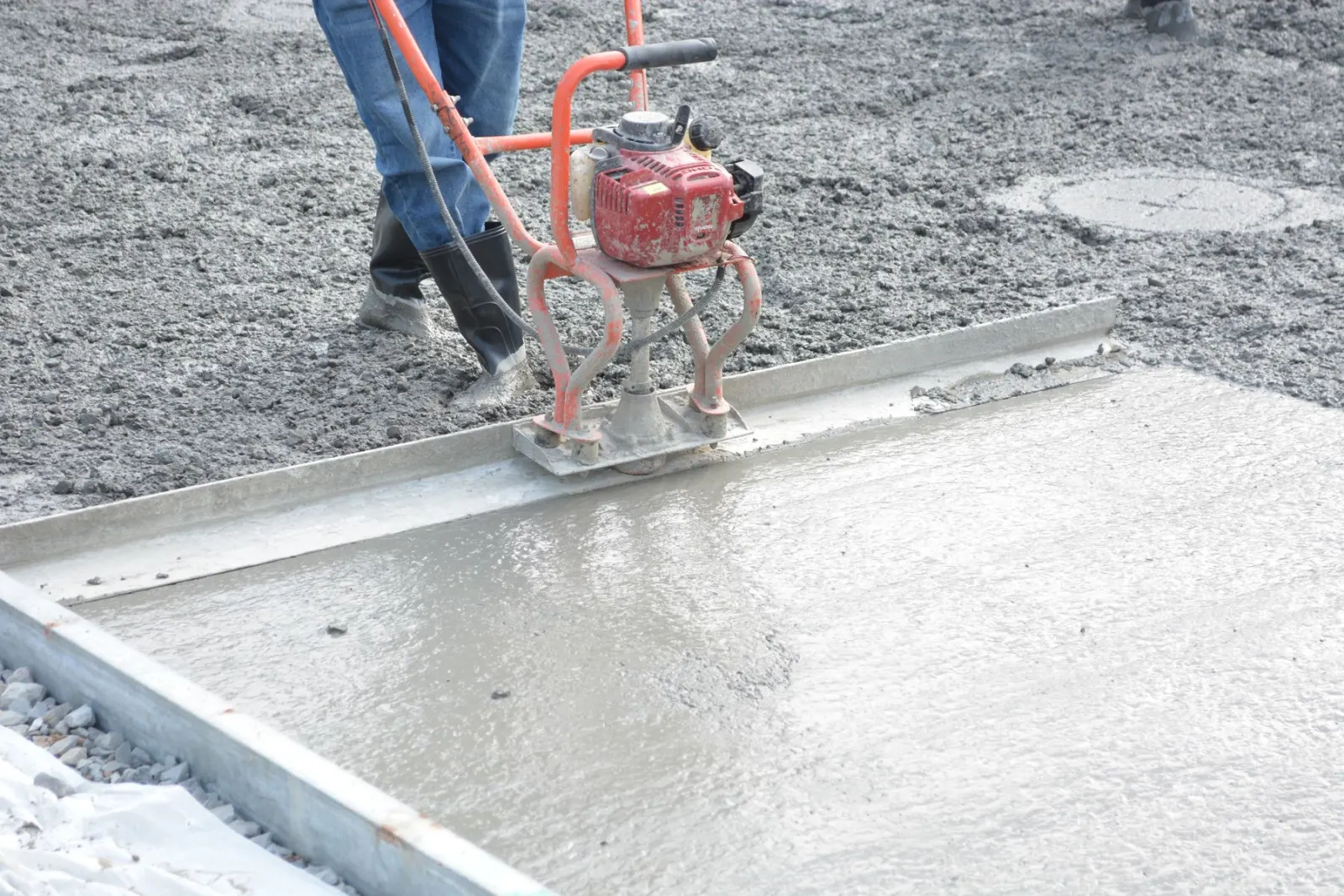
Two kinds of screed
A screed is the smooth layer laid over a concrete slab or insulation to give a flat, level base for the final floor. Most domestic screeds are one of two kinds, and they dry differently.
Sand and cement is the traditional one: a fairly dry mix laid by hand, compacted and finished with a trowel. It is usually laid thicker, especially over insulation or underfloor heating pipes.
Flowing screed, often calcium sulphate based and called anhydrite, is pumped in as a liquid and levels itself. It can be laid thinner, flows round heating pipes without voids, and goes down much faster.
When you can walk on it
Cemex, one of the UK's screed manufacturers, says flowing screeds can often take light foot traffic after 24 to 48 hours, and traditional sand and cement screeds may need three to seven days. Light foot traffic means walking across it carefully. It does not mean wheelbarrows, ladders, stacked materials or trades working on it, which all wait longer.
Check with whoever laid it, because the product data sheet for the specific screed sets the times and they vary.
When you can tile or lay a floor
This is the figure that matters, and it is much longer. The rule of thumb in the Tile Association's guidance for calcium sulphate screeds is one day per millimetre of thickness for the first 40mm, then two days per millimetre for anything beyond that, in good drying conditions. The same rule is widely used for sand and cement.
| Screed thickness | Rough drying time |
|---|---|
| 40mm | About 40 days |
| 50mm | About 60 days |
| 65mm | About 90 days |
| 75mm | About 110 days |
Good drying conditions means a warm, ventilated building with the windows in. A cold house in winter, or a room sealed up with other wet trades going on, can take a lot longer than the table.
Test it rather than counting days
The calendar is an estimate. The real test is a moisture reading taken by a flooring contractor or tiler, usually with a hygrometer hood sealed to the screed surface that measures the humidity of the air trapped above it.
The flooring or adhesive maker sets the figure the screed must reach. The Tile Association guidance gives 75% relative humidity, or 1% moisture by weight, for calcium sulphate screeds. Some floor finishes, particularly timber, ask for drier still. Laying a floor on a screed that has not reached the figure is the usual cause of tiles debonding, timber cupping, and vinyl blistering.
Tiling onto a flowing screed
A calcium sulphate screed forms a weak skin called laitance on its surface as it sets. The Tile Association says this layer must be removed, because it is too weak to tile onto and it also slows the drying. It is normally sanded off once the screed is hard enough.
After that the floor is sealed with the primer the adhesive maker specifies, applied until no more is absorbed and left to dry before tiling. Cement-based tile adhesives and calcium sulphate screeds should not meet without that primer between them.
What to ask whoever lays it
- Which screed is it, and can I have the product data sheet?
- How thick will it be at its thinnest and thickest points?
- When can other trades walk on it, and when can they work on it?
- Who removes the laitance on a flowing screed, and when?
- Who does the moisture test before the floor goes down, and what figure are we aiming for?
The thickness question matters because the drying time follows the deepest part of the floor, not the average. A screed laid 50mm in most of the room and 80mm where the slab dips is drying to the 80mm timetable. Write the target date for the flooring into the programme from the start, so the fitter is booked for a day the floor will be ready.
Speeding it up safely
Ventilation and gentle warmth do most of the work. Keep windows open a crack, keep the building heated, and run a dehumidifier in a closed room. Do not cover the screed with polythene or lay anything on it while it is drying.
If the screed is over underfloor heating, the system can be used to help dry it, but only by following the warm-up schedule in the screed maker's instructions, raising the temperature slowly. Switching the heating straight to full cracks screeds. Our drying times guide covers the same principles for plastering and render.
Common questions
How long before I can walk on screed?
Usually 24 to 48 hours for a flowing screed and three to seven days for sand and cement, for light foot traffic only. Check the data sheet for the product that was laid.
How long before I can tile on screed?
As a rule of thumb, a day per millimetre for the first 40mm and two days per millimetre beyond that, then a moisture test to confirm. A 50mm screed is roughly two months in good conditions.
Can I lay laminate or vinyl after a few weeks?
Not until a moisture test shows the screed has reached the figure the flooring maker sets. Laying too early traps moisture and leads to blistering, cupping or failed adhesive.
Does underfloor heating dry screed faster?
It can help, but only by following the screed maker's warm-up schedule, raising the temperature gradually. Turning it straight up to full risks cracking the screed.