Guide
Why plaster cracks, and which cracks matter
Hairline cracking in a new skim is shrinkage and is cosmetic. A crack that follows a line, widens at one end or reopens after filling is telling you about the structure behind it.
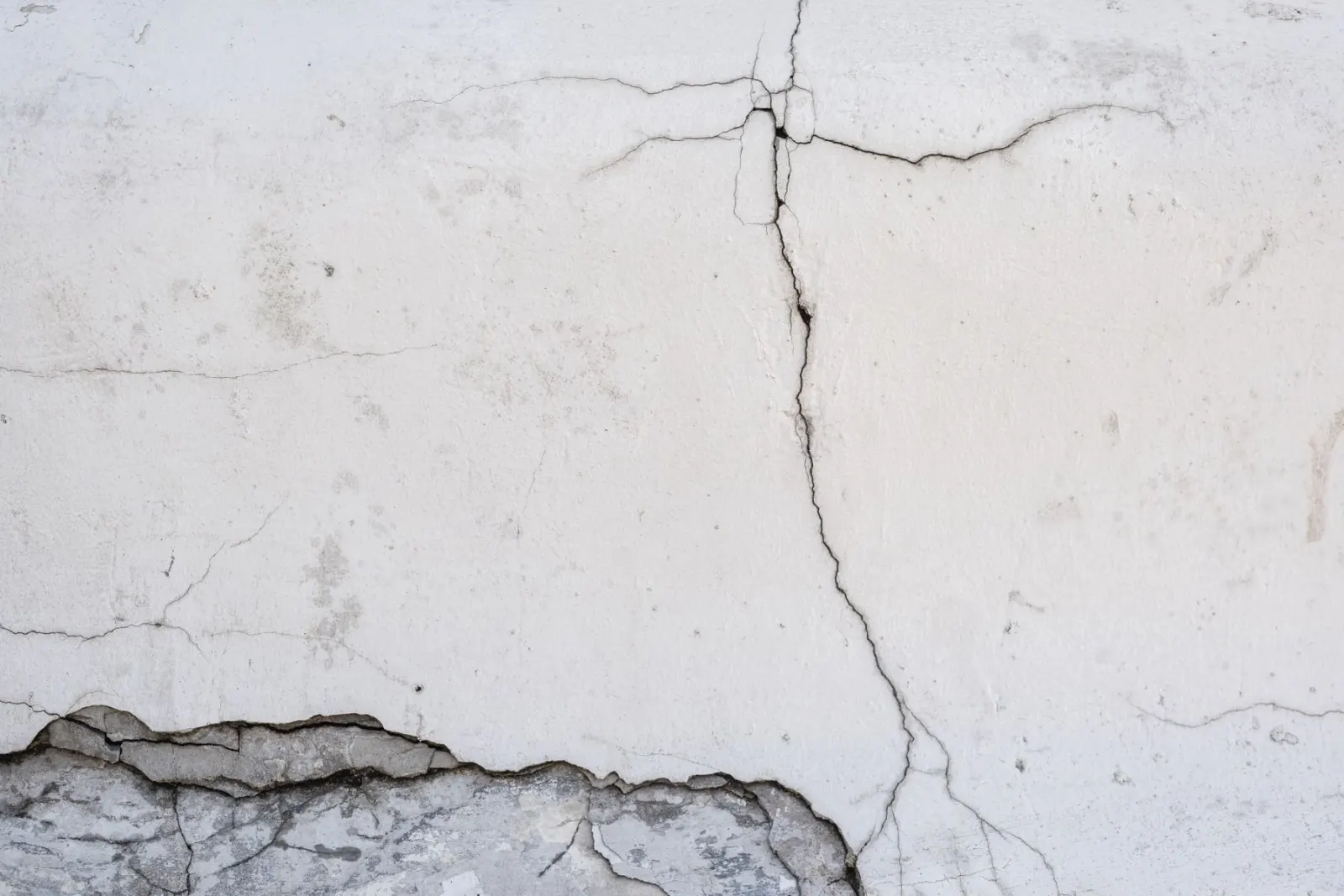
Most cracks are shrinkage and mean nothing
A new skim shrinks slightly as it dries and fine hairline cracking is the result. So is the fine crazing that appears across a ceiling in the first winter after plastering. Neither is a defect in the wall.
The test is width and pattern. Hairline means you cannot get a fingernail into it. Random, spidery and spread across an area means shrinkage. Filled and painted, those do not come back.
The cracks that are telling you something
Four shapes are worth paying attention to.
Diagonal cracks running from the corner of a window or door, especially ones that are wider at one end. Openings are weak points and a diagonal from one is movement rather than drying.
Cracks that follow a straight line, particularly along a ceiling or where two materials meet. These are usually a junction opening up: a plasterboard joint that was not scrimmed, or an extension moving against the original house.
Cracks that reopen after being properly filled. Filler does not fail on its own. If it has come back, something is still moving.
Cracks that change with the season, opening in winter and closing in summer, which is the signature of ground movement under the foundations, often clay shrinkage near trees.
Width, and when to get advice
As a rough guide: under one millimetre is decoration. One to five millimetres is worth monitoring and photographing with a date and a ruler in the shot. Above five millimetres, or anything you can see daylight through, is a structural engineer rather than a plasterer.
A plasterer filling a five millimetre crack that is still moving is being paid to hide information.
Blown plaster is a different problem
A hollow patch is not a crack, and it will not be fixed by filling. The plaster has separated from the wall behind and is held on by friction and paint.
Tap around the area to find its extent, which is usually larger than it looks. The repair is to cut back to sound material, rebuild in backing coat, and skim over scrim. Skimming over a blown area buries the problem for a year.
How repairs are actually done
A crack that matters is cut out rather than filled over: opened into a V so the filler has a body to key into, dusted out, filled in two passes because filler shrinks, then scrimmed if it is on a joint and skimmed over.
The common shortcut is a single pass of filler smoothed flush with a knife. It looks perfect for about four months and then reappears as a fine line under the paint, because the filler shrank as it dried.
Common questions
Should I worry about cracks in my walls?
Most are shrinkage and are cosmetic. Worry about diagonals from window and door corners, cracks wider than about five millimetres, cracks that change with the seasons, and cracks that come back after being properly filled.
Why do cracks keep coming back?
Because something is still moving. Filler does not fail on its own, so a crack that reopens is a symptom rather than a defect. Find out what is moving before paying to fill it again.
What is the difference between a crack and blown plaster?
A crack is a split in the surface. Blown plaster has come away from the wall behind and sounds hollow when tapped. Filling a blown area does not fix it; it has to be cut out and rebuilt.
When do I need a structural engineer?
Anything above about five millimetres, anything you can see through, anything that is clearly widening over weeks, and diagonals near openings on more than one floor. It costs a few hundred pounds and it either identifies a problem or rules one out.