Guide
Artex and asbestos: what to check before anyone sands it
Textured coatings put up before 2000 may contain asbestos, and sanding one is the thing not to do. What to test, what it costs, and why overboarding wins.
What Artex actually is
Artex is a brand name that became the word for any textured coating, and there were several makes. They were sold from the 1960s onwards as a way of finishing a ceiling without plastering it, and the pattern was combed, stippled or swirled into the wet coating by hand.
Up to around 1999, many of these coatings contained chrysotile asbestos as a reinforcing fibre, typically at two to five per cent. It was banned in the UK in 1999, so a coating applied in 2001 will not contain it and one applied in 1985 may well.
When it is a problem and when it is not
Intact, painted and left alone, a textured coating containing asbestos is not releasing fibres and is not doing anybody any harm. Asbestos becomes dangerous when it is made airborne.
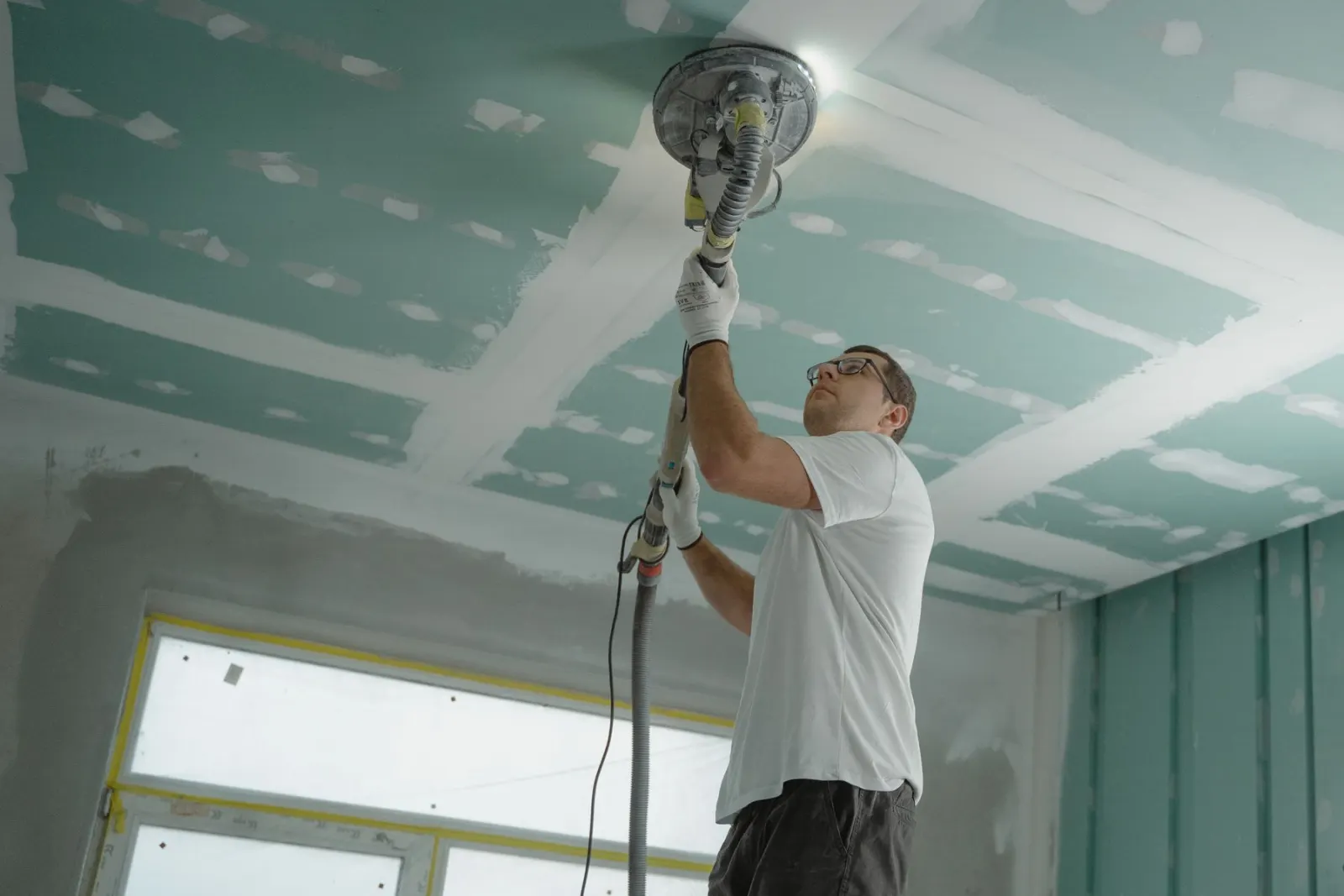
So the actions that matter are the ones that break it up: sanding it, scraping it dry, drilling it, or knocking the peaks off with an abrasive. Those are the things not to do, and a plasterer who reaches for a sander on a pre-2000 ceiling without asking is telling you something about how they work.
Testing, and what it costs
A sample test costs £30 to £60 and takes a few days. A small piece of the coating is taken, damped down first, and sent to a laboratory for analysis.
It is worth doing before you decide anything, because the result changes which options are even available. Thirty pounds is less than an hour of anybody's labour and it removes the question entirely.
The three routes
Skim over it. If the texture is shallow and the surface is sound, a bonding agent and a skim coat bury it. Nothing is disturbed. This is the cheapest route at £280 to £500 for a ceiling and it does not work on a heavy swirl.
Overboard it. New plasterboard is screwed through the old ceiling into the joists and skimmed. The original coating stays exactly where it is, sealed behind board. £380 to £700 for an average ceiling, and this is what most jobs end up doing.
Remove it. If a test comes back positive this is work under the non-licensed asbestos rules, with controlled wetting, sheeting and disposal, and it is done by a contractor set up for it rather than by a plasterer with a scraper. Quoted per job and a different order of cost.
What this site can and cannot tell you
Every listing here says what that business says it does. There is no public register of plasterers in the UK and no register of who is trained for non-licensed asbestos work that a directory can check a business against.
So this site does not say that any listed business is licensed, trained or competent to remove asbestos, because it has no way to know. What it can do is tell you the question to ask, which is: has this been tested, and if it has not, why are we deciding anything yet.
Common questions
Does all Artex contain asbestos?
No. Asbestos was banned in these coatings in the UK in 1999, so anything applied after about 2000 will not contain it. Before that it is likely enough to be worth testing at £30 to £60 rather than guessing.
Can I sand Artex myself?
Not on a pre-2000 ceiling that has not been tested. Dry sanding is the single action most likely to release fibres. If a test comes back clear, it is ordinary dusty work; if it does not, it is work for a contractor set up for it.
Is it safe to live with an Artex ceiling?
Yes, where it is intact and painted. Undisturbed asbestos in a textured coating is not releasing fibres into the room. The advice is to leave it alone or seal it behind board, not to remove it on principle.
Do I have to tell a buyer about it?
There is no duty to test before selling a home. If you have had it tested and it came back positive, that is a known material fact and hiding it when asked is a different matter. Surveys on pre-2000 houses often flag textured coatings as suspected anyway.